01
“junk removal near me”
A local collection or cleanout need.
Where the click should land
Accepted items, coverage and an estimate route.
 GROWTH NEVER SLEEPS.
Local & professional services / Built around your business
Make it easy to say what needs to go.
A sofa pickup and a full property cleanout require different job planning. We help junk-removal businesses connect item-specific and larger-project searches to clear accepted-material information and a useful pickup inquiry.
 Search
 SocialLocal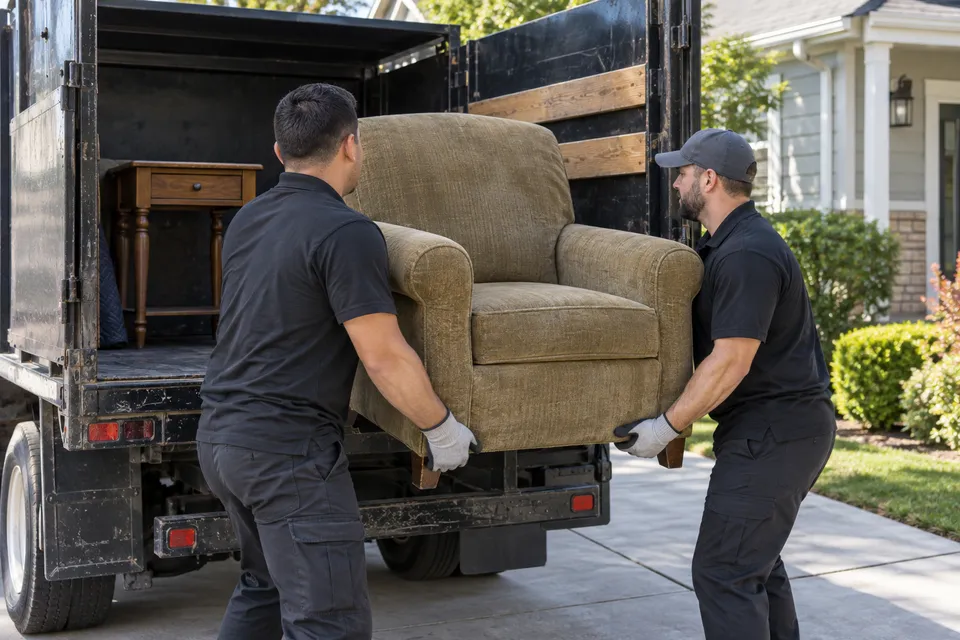
01 / Understand the decision
Explain the items and materials you collect, the cleanout categories you support and any genuine exclusions. A visitor should understand how an estimate is established. Avoid implying that every material is accepted or that a small headline price covers any load.
02 / Meet the moment of intent
The words in a search tell you what the next page needs to answer. These are starting points for keyword research, shaped by your services and actual coverage.
A local collection or cleanout need.
Accepted items, coverage and an estimate route.
A defined bulky-item pickup.
Furniture collection scope and booking information.
A larger multi-item project.
Cleanout capabilities and a scope discussion.
03 / Your competitive landscape
A business with the broadest message may still leave specific local needs unanswered. Compare competitors against the precise service, location and booking intent you want to attract.
Google visibility explorerIllustrative scenarioLocation 13: You 2 · A 7 · B 6
Share of sampled locations in the Maps top 3
Find where your specialist offer can be easier to understand, easier to verify and easier to book. Compare the value of a new customer with the cost and capacity to serve them.
Fictional rankings show how coverage can differ by search and location. These percentages are sampled Maps visibility, not market share, ad impression share or promised results.
When account data is available, review Auction Insights for competing advertisers, impression share and overlap.
How Google defines the metricsCheck the same service query across actual customer locations. Compare the businesses appearing in the local results and the relevance of your Business Profile.
Explore our local grid approachReview competing service pages against the intent behind “junk removal near me”. Look for useful information your own page could explain more clearly.
Review the keyword directions04 / From strategy to something you can see
Use organized collection and cleared-space imagery to show the service process. Meta creative can distinguish a single-item pickup from a full cleanout. Recycling or donation claims should reflect the business’s documented handling practices.
Choose a search
Select a search to see the destination change.
Accepted items, coverage and an estimate route.
05 / Social competitor research
What are other junk removal businesses asking people to notice? We examine the creative, the offer and the destination—then develop a direction worth testing for your business.
Facebook + InstagramResearch frameworkWhat we examine in competitor ads
A direction for your business
Use organized collection and cleared-space imagery to show the service process. Meta creative can distinguish a single-item pickup from a full cleanout. Recycling or donation claims should reflect the business’s documented handling practices.
Use accurate service examples and genuine business details. Keep illustrative creative distinct from customer reviews and completed work.
The next step is an informed test. Compare house cleanouts messaging with your own offer, agree on the conversion event and evaluate the response in your campaign data.
Inside our Meta approach06 / Be relevant close to home
Junk-removal SEO should connect item categories and cleanout services to practical operating areas. Keep accepted-material and booking information current. Useful local pages explain the service rather than repeating generic promises of immediate pickup everywhere.
Explore local visibility & grid reports07 / Give the next conversation a head start
Item category, approximate volume and location help qualify the request. Access and final handling requirements can be confirmed directly.
Requests for materials and areas you serve.
Suitable estimates reaching a confirmed job.
Booked work assessed against travel and collection capacity.
08 / Turn more visits into conversations
Explore the economics of junk removal lead generation. Keep traffic and click cost the same, then change the share of visitors who make an inquiry.
An inquiry is a call or completed form. A new customer is a separate outcome.
Estimated cost per inquiry
$100.00estimated inquiries / month
Cost per inquiry · USD
$200.00 per inquiry
$100.00 per inquiry
Same estimated monthly ad spend: $4,000.00 · Agency fees excluded.
Choose the event that starts a real customer conversation, then follow it through to a quote or booking. Compare new and repeat customers without counting the same inquiry twice.
Before we begin
A focused conversation about junk removal advertising.
Make genuine exclusions easy to find on the landing page and confirm them during intake. Clear accepted-material information prevents unsuitable bookings and misleading expectations.
Use accurate, specific statements supported by the company’s handling process. Avoid implying every collected item is recycled or donated when disposal outcomes vary.
We start with the services you want to grow and the areas you can serve. A search such as “junk removal near me” has a different brief from “property cleanout company”. A business with the broadest message may still leave specific local needs unanswered. Compare competitors against the precise service, location and booking intent you want to attract. Keyword selection is checked against actual inquiry quality as campaign data becomes available.
Choose the event that starts a real customer conversation, then follow it through to a quote or booking. Compare new and repeat customers without counting the same inquiry twice. For your business, useful first-contact context includes items or cleanout type, approximate load size, pickup location. We agree on the event definitions and review accepted-load inquiries alongside route and load fit. The calculator on this page is an adjustable example, not an industry benchmark or forecast.
Public ads help us review the message, format and next step offered by other businesses. For junk removal campaigns, we would examine whether the creative answers the needs behind “furniture removal service”. Use accurate service examples and genuine business details. Keep illustrative creative distinct from customer reviews and completed work. An active ad does not prove profitability; a creative idea still needs to be tested against your own conversion data.
Your business. A considered next move.
Tell us where you work, what you want to grow and what a good inquiry looks like. We’ll start there.